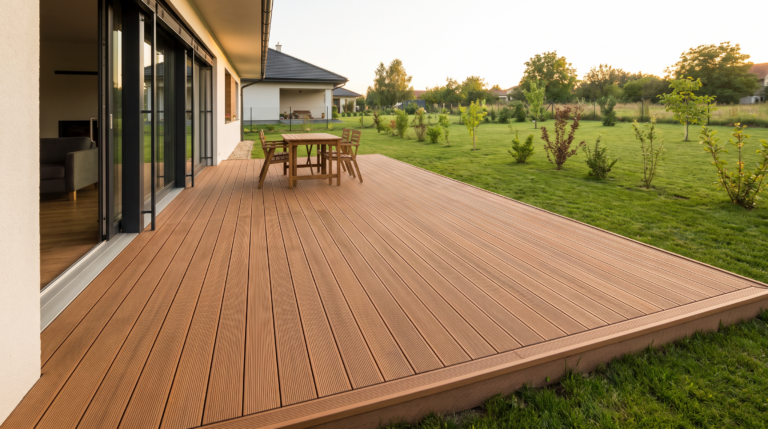

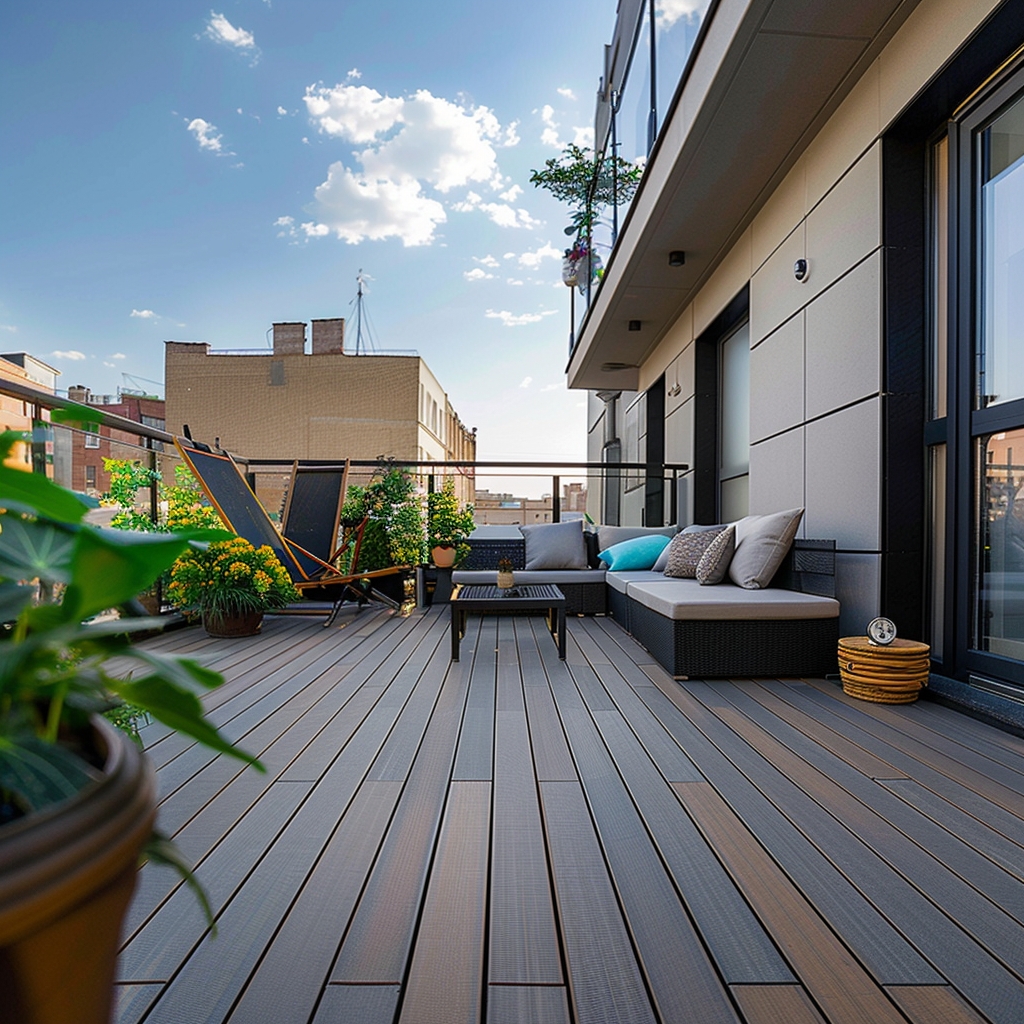
If you live in an area with plenty of sunny, hot days, you need to choose a decking material that can withstand wind and sun. Overall, composite material performs better than other outdoor materials when exposed to direct sunlight.
Traditional timber boards
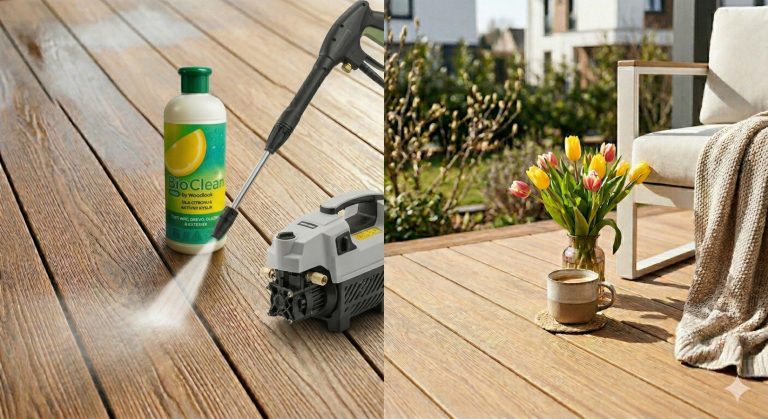
Traditional timber is a poor choice for several reasons. UV radiation can damage the structure of wood and cause it to degrade naturally when exposed to sunlight. Furthermore, traditional timber decking is more likely to absorb and retain heat. Direct sunlight can also accelerate the evaporation of moisture from the wood. This can lead to structural issues that cause cracking and splitting. In addition, UV rays can damage the colour of timber boards, making them more prone to discolouration. Timber decking requires regular pressure washing and staining, and damaged timber boards must be replaced immediately. This means that after installing a timber terrace, you will continue to invest time and money into it.
South-facing terraces receive the most sun, followed by west-facing ones. If you plan to build a south-facing terrace, you may want to consider composite material. Composite decking boards are among the most widely used decking materials available today. Composite boards are strong, durable, attractive, and available in a variety of colours. Furthermore, composite decking materials are virtually maintenance-free, saving you a lot of money on maintenance costs.
When considering composite decking for use in direct sunlight, the following criteria should be taken into account:
1) choosing the right board
2) colour changes due to strong UV radiation
3) rate of expansion and contraction due to temperature changes
These 3 factors allow us to determine which composite decking material is best suited for use in direct sunlight. As with any home improvement project, aesthetics are key for an outdoor terrace. An attractive board design will enhance your enjoyment of outdoor living. High-quality composite boards that do not fade are more likely to retain their attractive appearance over a long period.
Choosing the right board
No matter how hot the sun gets, you need a terrace that will not burn your feet. The amount of heat absorbed varies from one decking material to another. Therefore, you need a composite board that remains cool to the touch to enhance outdoor comfort.
Here, we recommend the Woodlook range of hollow composite boards. This hollow composite board features a hollow structure. A hollow structure promotes better air circulation, enabling the composite board to dissipate heat more effectively. Additionally, the hollow structure reduces the weight of the decking board, making transport and installation easier.
If you want to reduce the temperature of your outdoor terrace, choose a lighter colour range. For example, Teak or Merbau.
Fading due to strong UV radiation
Strong UV radiation can cause significant fading on outdoor timber decking, making your exterior space unappealing. Therefore, it is essential to choose high-quality, fade-resistant composite decking boards.
Most composite board manufacturers on the market offer fade-resistant composite boards.
Expansion and contraction caused by temperature changes
Almost everything is subject to thermal expansion and contraction. Outdoor terraces are particularly susceptible to thermal expansion and contraction when exposed to direct sunlight. So what does thermal expansion of outdoor terraces mean for homeowners? It means that if you do not leave sufficient spacing during installation, the decking boards can expand due to thermal expansion and ultimately warp.
This means that when choosing composite boards, we encounter these scenarios. We need to choose a brand of composite decking with a quality guarantee. A high-quality composite decking board expands and contracts relatively less with temperature changes. However, when installing composite boards in accordance with the manufacturer’s installation instructions, it is still essential to ensure adequate expansion gaps are provided.
Generally, composite decking boards should be left to rest for a few days before installing outdoor composite decking to allow them to acclimatise to the local climate. Furthermore, when installing composite decking, leave an expansion gap of 8 mm between adjacent boards. This prevents composite decking boards from expanding due to high temperatures, which could lead to warping.