
Over the years, composite decking boards and timber have been popular materials for builders, designers and homeowners alike. Both timber and composite have their own advantages and are commonly used outdoors.
In this article, we will look at all the main advantages of composite decking and why it is so popular and superior to timber. Once you understand their pros and cons, you will see why composite decking boards have transformed the industry and outdoor design, becoming the ultimate decking material for modern outdoor spaces.
- Long service life
- When it comes to strength and durability, composite boards outperform timber ones. Wood can rot, decay and be damaged by insects, whereas composite decking boards do not suffer from these issues. A composite board is made of wood fibres and recyclable plastic. It has a solid, stable surface that withstands weathering year after year. Since the terrace surface does not fade, warp or splinter, it remains clean and safe for years. Composite decking is therefore a great long-term investment.
- Virtually maintenance-free
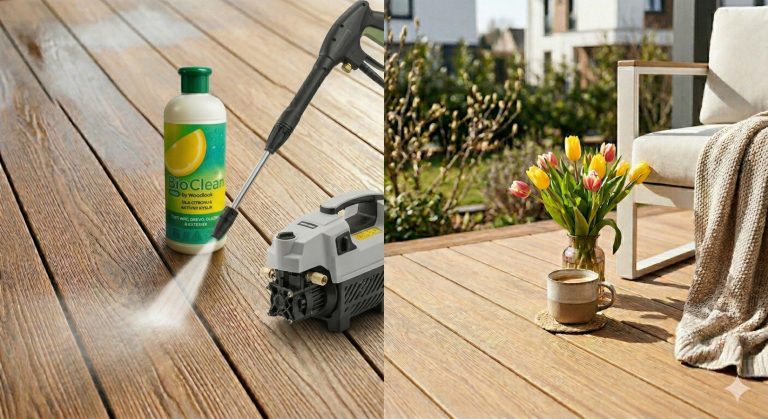
- One of the main reasons people choose composite decking materials is that they require very little maintenance. While timber needs to be stained, sealed and painted regularly, composite decking boards only require routine cleaning to retain their beautiful appearance.
- Composite material shares properties with plastic, making it far less susceptible to stains, mould and mildew. Furthermore, composite decking boards do not need sanding or sealing, saving you time, effort and ongoing maintenance costs.
- Environmentally friendly
- Choosing composite materials is an eco-friendly option that contributes to sustainability and responsible resource management. Because composite materials contain wood fibres and recyclable plastics, less fresh timber is used. This helps protect trees and reduce deforestation, while the use of recyclable plastics helps safeguard our environment.
- Attractive appearance
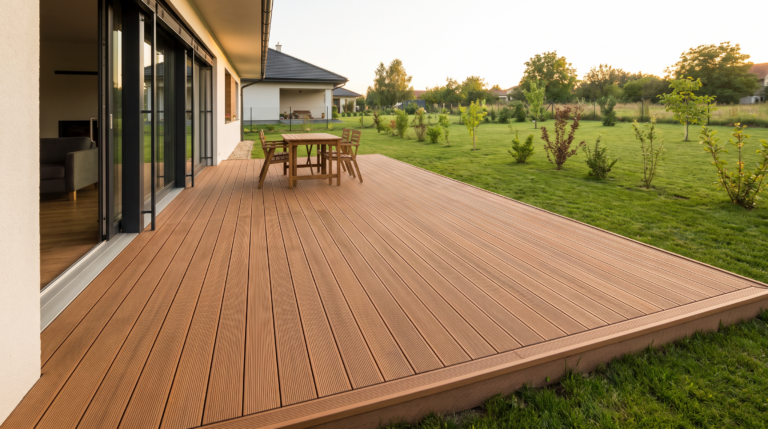
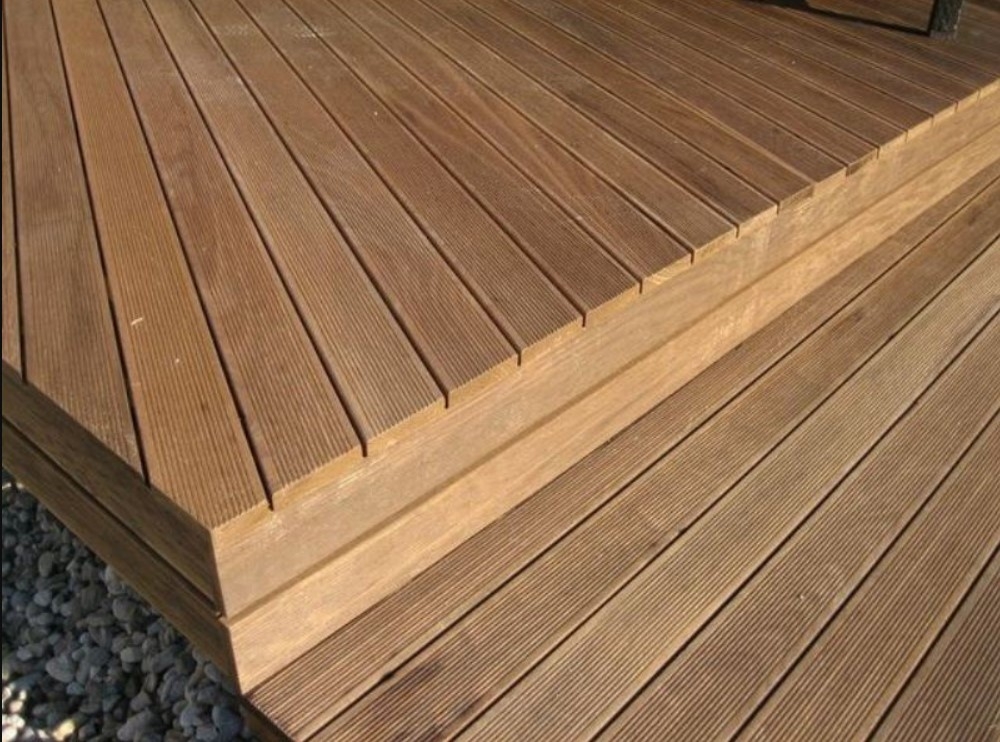
- Timber decking offers a natural look, and composite decking delivers the exact same appeal. Today, composite decking boards feature a natural-looking wood grain pattern that provides the authentic look of timber decking.
- Unlike timber decking, composite decking manufacturers offer a wide range of colours and surface finishes. This allows you to find the perfect shade to suit your outdoor space.
- Barefoot friendly
- When timber boards are used over a long period, their surface cracks and produces splinters. In contrast, composite decking features a smooth, splinter-free surface that will not crack.
- Pest resistant
- Many pests, such as termites and other wood-boring insects, can burrow into timber boards. In contrast, pests do not target composite materials, significantly reducing the risk of infestation.
- Those who own composite decking can be confident that these boards will remain pest-free and structurally stable for a long time.
- They do not warp
- Timber decking can deform, bow and warp when exposed to changes in moisture and temperature.
- If this happens, the terrace surface becomes uneven and dangerous.
- The water resistance of composite decking ensures it will not deform, bow or warp. The surface of the board remains flat and stable even in adverse weather conditions.
- UV-resistant
- UV radiation can cause timber decking to fade and discolour. To prevent surface fading and discolouration, composite decking manufacturers incorporate UV inhibitors and protective coatings during production. As a result, you can use composite decking boards without worrying about them fading during long-term exposure to the sun.
- Higher initial costs
- Although composite materials may cost more to purchase than timber, they can save you money in the long run. With composite decking boards, you can save a lot of time, money and effort because they require little maintenance and last a long time.
- Over time, timber boards need regular staining, sealing and repair. After many years of use, the total cost of timber decking will be higher than that of composite decking.
- Weather resistance
- Composite decking material is highly weather-resistant, so you can use it with confidence in all types of weather. Composite decking boards will not deform, crack or rot when exposed to extreme heat, freezing weather, heavy rain or high humidity.
- Timber, on the other hand, is vulnerable to the weather, which can lead to costly repairs or premature replacement of the terrace.
Impact-resistant
The tough exterior of a composite board makes it highly resistant to impacts and scratches. This makes it ideal for high-traffic areas. Timber, on the other hand, is more susceptible to dents and scratches and requires frequent sanding and refinishing to maintain its appearance.
Design versatility
Composite boards offer designers and homeowners more options when it comes to customising outdoor areas. It is easy to shape and can be crafted into various sizes. This makes it useful for creating decking with unique designs and curved edges that can be difficult to achieve with timber.
Customisable composite decking boards make outdoor projects more enjoyable and creative, allowing people to design decking tailored to their specific needs
Easy installation
Composite decking boards are easier to assemble than timber ones because they are more uniform and lighter. Composite decking boards are easy to install as they are all the same size and shape, so you do not have to sort and cut them.
Composite boards often come in longer lengths, creating fewer seams across the terrace. The advantage of installing composite decking is that it saves time and labour costs. This makes it a great choice for both DIY enthusiasts and professionals.
Hidden fasteners
Composite decking introduces a modern way to fix decking boards and enhance their appearance. Hidden clips and fasteners secure composite decking boards while keeping the floor smooth and tidy.
This hidden fixing method not only improves the look of the terrace, but also makes walking barefoot safer and more comfortable.
Conclusion
By taking advantage of composite decking, homeowners can make their outdoor space beautiful, functional and environmentally friendly. Composite boards are versatile, resilient against weather and fire, and feature superior fixing systems that allow you to create unique decking designs. Choosing composite decking material over timber aligns with green and sustainable practices, helping to build a greener and more eco-friendly future.
There are things timber simply cannot deliver where composite decking materials excel.
Composite boards are stronger and require less maintenance than timber boards. And as composite decking material continues to evolve and improve, it will remain a leader in the building industry.